MOLEX 74547-0120 Parallel Sas Mini 1M
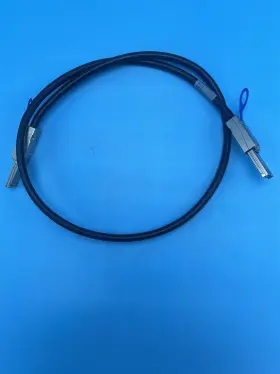
( Brand: Molex ), ( Manufacturer Part Number: 74547-0120 )
Review MOLEX 1m Parallel Pair Sas Mini To
The Molex 74547-0120 1m Parallel SAS Mini-SAS HD Cable is a high-performance data transfer solution designed for use in data centers, storage systems, and other enterprise applications. This cabling system is built to ensure reliable and efficient transfer of data between servers and storage devices using Serial Attached SCSI (SAS) technology.
The cable features a mini-SAS connector on each end, which is a compact and versatile configuration that allows for greater cable management and easier installation in dense environments. The 1-meter (3.3 foot) length of the cable offers ample reach between components while maintaining flexibility and ease of use.
The Molex 74547-0120 cable supports transfer rates up to 6GBps, allowing for high-speed data transfer between devices. It is able to handle large amounts of data and complex workloads, making it an ideal choice for applications such as data backup, disaster recovery, and massive data processing.
This cable is constructed with high-quality materials and rigorously tested to ensure compatibility and reliability. It is module compliant with SAS 3.0 and backwards compatible with earlier SAS versions, making it a versatile addition to any SAS infrastructure.
The Molex 74547-0120 cable is excellent for use in mission-critical applications where data security and uptime are top priorities. With its strong build quality, it can withstand the rigors of demanding enterprise environments and provide dependable performance day in and day out. Investing in this high-quality SAS cable can help minimize downtime, improve productivity, and enhance overall system performance in your data center or IT infrastructure.
Molex 74547-0120 1m Parallel SAS Mini Cable: A Detailed Analysis
Molex 74547-0120 is a 1-meter long parallel SAS (Serial Attached SCSI) mini cable designed for data transfer in high-performance storage applications. Striving for impartiality, let's explore both sides - the advantages and disadvantages - to help you make an informed decision on whether or not to invest in this cable.
Advantages:1. High-speed data transfer: The Molex 74547-0120 cable supports SAS data transfer rates of up to 16Gbps, ensuring reliable and quick data transfer between different components.
2. Robustness: SAS cables are built to be more durable than their SATA counterparts because they have a thicker cable and connector design. This increased durability makes Molex's SAS mini cable a suitable choice for demanding and high-traffic applications.
3. Application versatility: SAS technology supports both internal and external connectivity, allowing this cable to be employed in a variety of situations, from internal server connections to external storage devices.
4. backward compatibility: This Molex SAS mini cable is capable of supporting SATA devices when used with proper SAS to SATA convertors (not included).
5. Long lifetime: Due to their robust design, SAS cables generally have a longer lifespan compared to SATA cables.
Disadvantages:1. Higher price point: SAS cables, such as the Molex 74547-0120, typically cost more than their SATA counterparts. Upgrading to a SAS cable might be an unnecessary expense for users only needing a standard SATA connection.
2. Limited flexibility: Though it might be considered a pro when it comes to robustness, the thicker design makes SAS cables less flexible than their SATA counterparts, which could create challenges in environments with limited cabling real estate.
3. Complexity: SAS technology incorporates more complex signaling and error handling compared to SATA, which might require some level of additional expertise and configurational effort from the user.
Conclusion:The Molex 74547-0120 1m parallel SAS mini cable is recommended for users and businesses that need high-speed, high-performance storage connectivity to support demanding applications where durability is a crucial factor. Its robust design, high data transfer rates, versatility, and backward compatibility make it a staple in modern high-performance storage systems.
However, prior to making a purchase, consider the trade-offs between SAS and SATA, and weigh the pros and cons accordingly based on your specific use case and the associated potential costs. If your requirements are more standard and a lower price point is essential, a SATA cable might be a more suitable choice. Finally, always ensure that the required hardware and devices support the SAS standard to achieve optimal performance.
Details:
part #: 745470120 prices
- $10.00-$61.72
specifications serversappy:
- brand: Molex
- manufacturer part number: 74547-0120
offer serversappy:
- sold: 0
- options: Ship-to-home
- started: January 22, 2025
- availability: In Stock
- quantity: 2
payments serversappy:
- credit card: Discover
- wallet: Paypal
- other
shipping serversappy:
- type: Calculated
- class: Standard
- service: USPS Ground Advantage
- carrier: USPS
- cost: $6.40
- transit: 5-10 Days
seller serversappy:
- city: Salinas, California
- # reviews: 1634
- rating: 99.8%
general serversappy:
- condition: Used
- Enterprise Networking, Servers > Server Components > Other Ent Server Components
returns serversappy:
- paid by: Buyer
- time: 30 Days
- method: Money back
- policy: Returns Accepted
Molex 74547-0120 Is Similar To:
- Molex 112-00436 A0 112-00436 A0 Netapp 1m Mini Sas Hd To Cable (43% similar) 112-00436 a0 Molex net app 1m mini sas HD to cable: thumbnails. Free shipping. Molex net app 1m mini sas HD to cable, 112-00436 a0 continental USA only free FedEx ground shipping. 100% satisfaction, guaranteed. 30 day warranty. Buyer pays shipping and handling...(September 20th, 2024)
- Molex 112-00435 A0 112-00435 A0 Netapp 5 Mini Sas Hd To Cable (43% similar) Free shipping. 100% satisfaction, guaranteed. Molex net app .5 mini sas HD to cable, 112-00435 a0 continental USA only free FedEx ground shipping, 30 day warranty. 112-00435 a0 Molex net app .5 mini sas HD to cable: thumbnails. Shipping - costs listed are to...(September 20th, 2024)
- Ibm 46c4005 Mini Molex Sas Signal Cable X3500 46c4006 (18.4% similar) IBM 46C4005 mini Molex sas signal cable X3500 46C4006...(September 20th, 2025)
- Molex 74547-0106 External Ipass 6m 24 Awg Multi-lane Sas X4 Cable New Other (46.7% similar) 0-HOURS on hard drives means the are never installed/used in a system and is brand new with no hour usage them. If you re looking to buy high quality it products, look no further. All the logos used are propriety to their respective owners and technology trader does not have any authority over...(October 29th, 2025)
- Cisco 1110961071 Ucs-c240-m3s Molex Sas Cable Pulled (22.7% similar) Technology trader is an independent distribution channel and not associated with hp, dell, AMD, Cisco, Molex, intel, Hitachi, IBM, logic, Samsung, sea gate, sun, western digital all other mentioned above. Or its subsidiaries in the USA and other countries...(October 30th, 2025)
- Cisco 1110961055 6 Molex Mini Sas To 4-sata Cable And Power 1110961055 Port1 1110961056 Port2 (18.8% similar) The Molex mini sas to 4-SATAY cable power port 1 port 2 is a high-quality cable designed for server networking components. Ideal for enterprise networking setups, this cable ensures efficient data transmission and stability server systems. Its compact design makes it easy to set up and maintain...(April 4th, 2026)

2 offers $10.00–$61.72 USD
- Used. Offer #1 priced at $10.00 + $7.60 delivery = $17.60* total. External iPass Mini Multi-Lane SAS X4 Cable Assembly, 26 Circuits, 28 AWG, 1 m Length, Key 2, 4 and 4, 6.+$7.60 shipping
- New. Offer #2 priced at $61.72 + $8.50 delivery = $70.22* total. +$8.50 shipping