DELL 26H63 Poweredge Pcie Riser R760 R7615 R7625 2X8 4Q K8RPJ
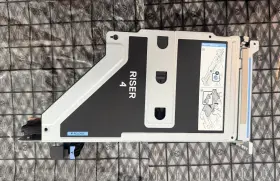
( Brand: Dell ), ( Type: Riser ), ( Unit Type: Unit ), ( Manufacturer Part Number: 26H63 ), ( Country Of Origin: China )
Review DELL Poweredge Pcie 2x8 Riser 4q
The Dell PowerEdge R760, R7615, and R7625 servers are part of Dell's high-performance, enterprise-class rack servers designed for mission-critical applications. These servers offer exceptional computing power, storage capacity, and expandability to meet the demands of today's data-intensive workloads. To enhance the versatility of these servers, Dell offers an optional PCIe 2x8 riser card, specifically the K8RPJ model.
The K8RPJ riser card is a crucial component for expanding the I/O capabilities of the PowerEdge R760, R7615, and R7625 servers. It features two full-length, half-height, and two low-profile PCIe 8x expansion slots, allowing you to install a variety of high-performance add-in cards, such as network adapters, storage controllers, or GPUs, depending on your specific infrastructure needs.
Each PCIe slot on the K8RPJ riser card supports data transfer rates of up to 8 GT/s, ensuring optimal performance for the installed expansion cards. The riser card is designed with a robust and secure construction, featuring a locking mechanism for each slot to help prevent accidental card removal.
Installing the K8RPJ riser card is a straightforward process. It can be easily mounted in any available PCIe slot on the server's motherboard, and it comes with all necessary mounting hardware. Once installed, the riser card provides the additional PCIe slots required for expanding the server's I/O capabilities, enabling you to build a more comprehensive and flexible infrastructure.
The K8RPJ riser card is an essential accessory for organizations that require high-density, high-performance servers with excellent I/O flexibility. It allows you to tailor the PowerEdge R760, R7615, and R7625 servers to your specific use cases, ensuring that they can handle the demands of your most complex and data-intensive workloads.
The Dell PowerEdge R760, R7615, and R7625 servers are high-performance, enterprise-grade systems designed for data center environments. They come with PCIe 2x8 riser cards (K8RPJ) that support up to four quad-wide GPUs or other PCIe devices. Here are some pros and cons of buying this server configuration:
Pros:1. Scalability: With the ability to support up to four GPUs per server, these systems offer excellent scalability for applications that require high GPU compute power.
2. Enterprise-grade reliability: Dell PowerEdge servers are known for their robustness and reliability, making them an excellent choice for mission-critical workloads.
3. Flexibility: The servers support a wide range of processors, memory configurations, and storage options, allowing you to tailor the system to your specific requirements.
4. Expandability: The servers offer multiple expansion slots, enabling you to add additional components such as network adapters, storage controllers, or other PCIe devices as your needs grow.
5. Management features: Dell OpenManage tools provide comprehensive server management capabilities, allowing you to monitor, manage, and update your servers remotely.
Cons:1. Cost: High-performance servers like the PowerEdge R760, R7615, and R7625 are not inexpensive. The cost of the server, riser cards, and GPUs can add up quickly.
2. Power consumption: These servers consume a significant amount of power, which can increase your data center's energy costs.
3. Complexity: Setting up and managing these servers can be complex, requiring specialized knowledge and tools.
4. Compatibility: Ensure that the GPUs you plan to use are compatible with the server and riser card configuration.
5. Maintenance: Due to their size and complexity, these servers require regular maintenance to ensure optimal performance and reliability.
In conclusion, the Dell PowerEdge R760, R7615, and R7625 servers with PCIe 2x8 riser cards (K8RPJ) offer excellent performance and scalability for applications that require high GPU compute power. However, they come with a high cost, power consumption, complexity, and maintenance requirements. If your budget and infrastructure can support these servers, they can provide excellent value for enterprise-grade workloads. If not, you may want to consider alternative server configurations or cloud-based solutions. Ultimately, the decision to purchase this server configuration depends on your specific use case, budget, and infrastructure capabilities.
Details:
Dell PowerEdge R760 R7615 R7625 PCIe 2x8 Riser 4Q 26H63 K8RPJ.
part #: 26h63 prices
- $99.00-$325.00
specifications serversappy:
- brand: Dell
- type: Riser
- unit type: Unit
- manufacturer part number: 26H63
- country of origin: China
general serversappy:
- condition: Used
- Enterprise Networking, Servers > Server Components > Other Ent Server Components
shipping serversappy:
- transit: 4-10 Days
- cost: $18.75
- type: Fixed
- class: Standard
- carrier: UPS
- service: UPS Ground
payments serversappy:
- wallet: Paypal
- other
- credit card: Discover
seller serversappy:
- # reviews: 413
- rating: 100.0%
- city: wood land Hills, California
returns serversappy:
- policy: No Returns
offer serversappy:
- availability: In Stock
- best offers: True
- sold: 0
- options: Ship-to-home
- started: April 13, 2026
- quantity: 1
Dell 26H63 Is Similar To:
- Dell 0jnmfw Poweredge C4130 160x90mm Thermal Module Sxm2-gpu Cooling Heatsink Jnmfw B (37% similar) No others please. The photos and the actual item may have 5-10% difference. Select a topic. Exchange on certain items. Lock: ROOM202-G. Dell poweredge C4130 160X90MM thermal module SXM2-GPU cooling heat sink Jenifer a n technology solution...(July 21st, 2024)
- Dell 72hgp Poweredge R430 Mini Sas Sata Ssd Bp To Perc Cable Black 072hgp (43.3% similar) The listed prices do not apply. May have signs on wears...(July 21st, 2024)
- Dell 4pg76 Poweredge 2u Server Front Bezel P n 04pg76 Tested Grade B (38.8% similar) Any parts not photographed will not be included. Dell poweredge 2u server front bezel p/n: 4PG76 tested working please carefully review the photos and details of item before purchasing to avoid buying incorrect. Cosmetic issues are not covered...(July 21st, 2024)
- Dell 0800jh 800jh Slot 6 Pcie 3.0 X16 Riser 3 Card For Poweredge R730xd R730 (36.5% similar) That fact may be exhibited in possible wear and tear associated with normal everyday use. Shipping is free. This is a used item. It is ideal for those who are looking other enterprise server components. There are not too many problems that cannot be rectified, if we communicate...(July 21st, 2024)
- Dell 0y446j Y446j Lot Of 10 Poweredge Tray For R410 And R510 3.5 Inch Non Hot Plug (32.2% similar) No screws included. Lot of 10 Dell poweredge tray Y446J for R410 and R510 3.5 non hot plug...(July 21st, 2024)
- Dell Cn-okp013 Poweredge Power And Usb Circuit Board Spare Parts Tested Working (34.3% similar) With the brand name Dell, you can be assured of quality and durability this board. Pulled from a working environment. Get your hands on this essential board today and keep server running smoothly. It is a great choice for those in need of replacement or spare parts their server...(July 21st, 2024)
- Dell Ddt01 Poweredge T60 Front Cover With Key (47.2% similar) Dell poweredge T60 front cover DDT01 w/ key, condition information whats included, includes: key.these items have been tested, and are guaranteed to be in good working condition. And computer equipment of all kinds. If a specific delivery type is required .e. Outer case may show some minor...(July 22nd, 2024)
- Dell Ffw09 2x Fh Pcie X16 Riser 1 Card 2u R1c For Poweredge R7525 (38.1% similar) 2x full height pci express X16 riser 1c assembly for Dell poweredge R7525 servers...(July 22nd, 2024)
- Dell 05nv48 5nv48 Pcie X16 Riser 2c Card For Poweredge R450 (31.7% similar) Pci express X16 riser 2c card for Dell poweredge R450 servers...(July 22nd, 2024)
- Dell 0k617r Poweredge T110 Front I o Control Panel Board P n Tested Working (41.2% similar) We must receive return/exchange items. Cosmetic issues are not covered under the guarantee. Dell poweredge T110 front i/o control panel board p/n: 0K617R tested working, please carefully review the photos and details of item before purchasing to avoid buying incorrect...(July 22nd, 2024)
- Dell 0kw180 Kw180 Poweredge Fc630 104mm Cpu1 High Performance Heatsink 135w Screw Down 5jngy (35.3% similar) Dell poweredge FC630 104MM CPU1 high performance heat sink 135W screw down 5 Jung. No others please. Exchange on certain items. Select a topic. A n technology solution. The photos and the actual item may have 5-10% difference...(July 22nd, 2024)

5 offers $99.00–$325.00 USD
- Used. Offer #1 priced at $325.00 + $18.75 delivery = $343.75* total. Dell PowerEdge PCIe 2x8 Riser 4Q .+$18.75 shipping
- New. Offer #2 priced at $99.00 + $0.00 delivery = $99.00* total. FREE SHIPPING
- Used. Offer #3 priced at $179.32 + $0.00 delivery = $179.32* total. YES, THIS ONE! A&N Technology Solution The photos and the actual item may have 5-10% difference.FREE SHIPPING
- Open box. Offer #4 priced at $225.00 + $0.00 delivery = $225.00* total. About MK Trading. DELL EMC SERVERS.FREE SHIPPING
- Used. Offer #5 priced at $68.98 + $0.00 delivery = $68.98* total. Dell EMC StorageDell PowerVault Dell Compellent. CompatibilityDell PE R550 R570 R750xs xs R770 R7715 R7725.FREE SHIPPING