DELL 0DKD4P Dual Nvme Ssd Raid Pcie Card M.2
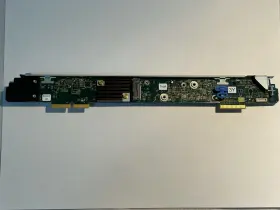
( Brand: Dell ), ( Type: Adapter ), ( Unit Type: Unit ), ( Manufacturer Part Number: 0DKD4P ), ( Country/region Of Manufacture: China )
Review DELL Dual Direct M.2 Nvme Ssd Non raid Pcie Card
Introducing the Dell 0DKD4P Dual M.2 NVME PCIe Card, a versatile and high-performance solution for expanding your system's storage capabilities. This PCIe card supports two M.2 NVME SSDs in a non-raid configuration, allowing you to install multiple drives for increased capacity, faster read and write speeds, and improved system responsiveness.
The Dell 0DKD4P is designed with a low-profile form factor, making it an ideal choice for space-constrained systems. It is compatible with both full-height and low-profile PCIe slots, ensuring a seamless installation process. This dual-port PCIe card delivers up to 20Gb/s bandwidth and supports PCIe Gen 3 x4 interface for optimal data transfer rates.
Each M.2 NVME SSD slot on the Dell 0DKD4P card features a dedicated heatsink to maintain optimal operating temperatures, ensuring reliable and stable performance. The card is also backward compatible with SATA M.2 SSDs, providing added flexibility for users who want to upgrade their existing SATA drives.
Installing the Dell 0DKD4P is a straightforward process. Simply remove the backpanel of your PC, install the card into an available PCIe slot, and secure it in place using the provided screws. Once installed, connect your M.2 NVME SSDs to the card, and your system will automatically recognize the new storage devices.
The Dell 0DKD4P Dual M.2 NVME PCIe Card is an excellent choice for professionals, gamers, and power users who demand high-performance storage solutions. With its support for two M.2 NVME SSDs, low-profile form factor, and backward compatibility with SATA M.2 SSDs, this PCIe card offers the flexibility and performance you need to enhance your system's capabilities.
Dell D0DKD4P Dual M.2 NVME SSD Non-Raid PCIe Card: A Comprehensive Analysis
The Dell D0DKD4P is a PCIe card that supports the installation of two M.2 NVME SSDs in a non-raid configuration. In this analysis, we will discuss the pros and cons of purchasing this PCIe card to expand your system's storage capacity.
Pros:1. High-performance: The Dell D0DKD4P supports NVME SSDs, which offers significantly faster read and write speeds compared to traditional SATA drives.
2. Dual-drive capability: The ability to install two M.2 NVME SSDs on a single card allows for increased storage capacity and improved system performance.
3. Easy installation: Installing the SSDs on the card is a straightforward process, requiring no specialized tools or technical expertise.
4. Compatibility: The card is compatible with a wide range of systems, including desktops, workstations, and servers.
Cons:1. Price: The Dell D0DKD4P is a more expensive solution compared to installing a single M.2 NVME SSD directly to the motherboard or using a traditional SATA RAID controller.
2. Power consumption: Since the card supports two NVME SSDs, it consumes more power compared to a single-drive solution.
3. Complexity: While the installation process is relatively easy, managing the drives as separate volumes might require additional software or expertise.
Conclusion:The Dell D0DKD4P Dual M.2 NVME SSD Non-Raid PCIe Card offers high-performance and increased storage capacity in a compact form factor. However, its price and power consumption might be a concern for some users. If you require the highest possible storage performance and have the budget for it, this PCIe card is an excellent investment. For those who are more budget-conscious or have limited power supplies, installing a single M.2 NVME SSD directly to the motherboard might be a more suitable solution.
Recommendation:Considering the pros and cons outlined above, the Dell D0DKD4P Dual M.2 NVME SSD Non-Raid PCIe Card is a solid choice for those who prioritize high-performance storage and have the necessary budget. However, if you're on a tighter budget or have limited power supplies, a single M.2 NVME SSD installed directly to the motherboard might be a more suitable option. Ultimately, the decision comes down to your specific storage requirements and budget constraints.
Details:
Dell 0DKD4P Dual Direct M.2 NVMe SSD NON-RAID PCIe Card.
part #: 0dkd4p price
- $250.00
specifications serversappy:
- brand: Dell
- type: Adapter
- unit type: Unit
- manufacturer part number: 0DKD4P
- country/region of manufacture: China
returns serversappy:
- policy: Returns Accepted
- paid by: Seller
- method: Money back
- time: 30 Days
shipping serversappy:
- carrier: USPS
- transit: 4-10 Days
- type: Calculated
- class: Standard
- service: USPS Ground Advantage
- cost: $0.00
payments serversappy:
- other
- credit card: Visa
- wallet: Google-pay
seller serversappy:
- city: Round Rock, Texas
- rating: 97.6%
- # reviews: 790
offer serversappy:
- options: Ship-to-home
- availability: In Stock
- started: June 28, 2025
- best offers: True
- sold: 0
- quantity: 2
general serversappy:
- Enterprise Networking, Servers > Server Components > Other Ent Server Components
- condition: Used
Dell 0DKD4P Is Similar To:
- Dell 72hgp Poweredge R430 Mini Sas Sata Ssd Bp To Perc Cable Black 072hgp (37.5% similar) The listed prices do not apply. May have signs on wears...(July 21st, 2024)
- Dell 0800jh 800jh Slot 6 Pcie 3.0 X16 Riser 3 Card For Poweredge R730xd R730 (30.5% similar) That fact may be exhibited in possible wear and tear associated with normal everyday use. Shipping is free. This is a used item. It is ideal for those who are looking other enterprise server components. There are not too many problems that cannot be rectified, if we communicate...(July 21st, 2024)
- Dell 0y446j Y446j Lot Of 10 Poweredge Tray For R410 And R510 3.5 Inch Non Hot Plug (30.7% similar) No screws included. Lot of 10 Dell power edge tray Y446J for R410 and R510 3.5 non hot plug...(July 21st, 2024)
- Dell 0jpvhw 16gb Idrac Vflash C10 Sdhc Sd Card Module 13 Gen R630 R730 Jpvhw (27.5% similar) Few items are new and would be specifically labeled as such. On rare occasions, damages may occur while in transit. Is it too late. What is the condition of item I receive. Dutchmen is a proud member of the Microsoft registered refurbished program. I placed an order, but want to make a...(July 21st, 2024)
- Dell 0h1h8m 16gb Idrac Vflash C10 Sdhc Sd Card Module 13 Gen R630 R730 H1h8m (26% similar) Each product is tested and in good working condition when it shipped. I placed an order, but want to make a change. Shipping info: orders placed before 1PM est will predominantly ship on the same day as they were. On rare occasions, damages may occur while in transit. Dell power edge...(July 21st, 2024)
- Dell 037d9d 16gb Idrac Vflash C10 Sdhc Sd Card Module 13 Gen R630 R730 37d9d (26% similar) Few items are new and would be specifically labeled as such. Do you ship outside of the USA...(July 21st, 2024)
- Dell 66xhv 066xhv Precision M.2 2tb Ssd Nvme Installed Sas Flex Bay Module (38.8% similar) May have data on it so please wipe all. Pulled from a working 7820 system...(July 21st, 2024)
- Dell Bcm5708 Broadcom Dual Port Mezzanine Card (51.5% similar) Condition is used. Dell broad com BCM5708 dual port mezzanine card. Shipped with USPS ground advantage...(July 22nd, 2024)
- Dell Ffw09 2x Fh Pcie X16 Riser 1 Card 2u R1c For Poweredge R7525 (31.7% similar) 2x full height pci express X16 riser 1c assembly for Dell power edge R7525 servers...(July 22nd, 2024)
- Dell 05nv48 5nv48 Pcie X16 Riser 2c Card For Poweredge R450 (29.8% similar) Pci express X16 riser 2c card for Dell power edge R450 servers...(July 22nd, 2024)
- Dell Wx5kw Poweredge Server R450 R650xs Boss Dual M.2 Adapter No Ssd (37.4% similar) Dell WX5KW boss card no ssd drives are included. 90-DAY guarantee. In excellent condition, clean and fully functional...(July 23rd, 2024)

1 offer $250.00 USD
- Used. Offer #1 priced at $250.00 + $0.00 delivery = $250.00* total. Dell Dual Direct M.2 NVMe SSD NON-RAID PCIe Card.FREE SHIPPING